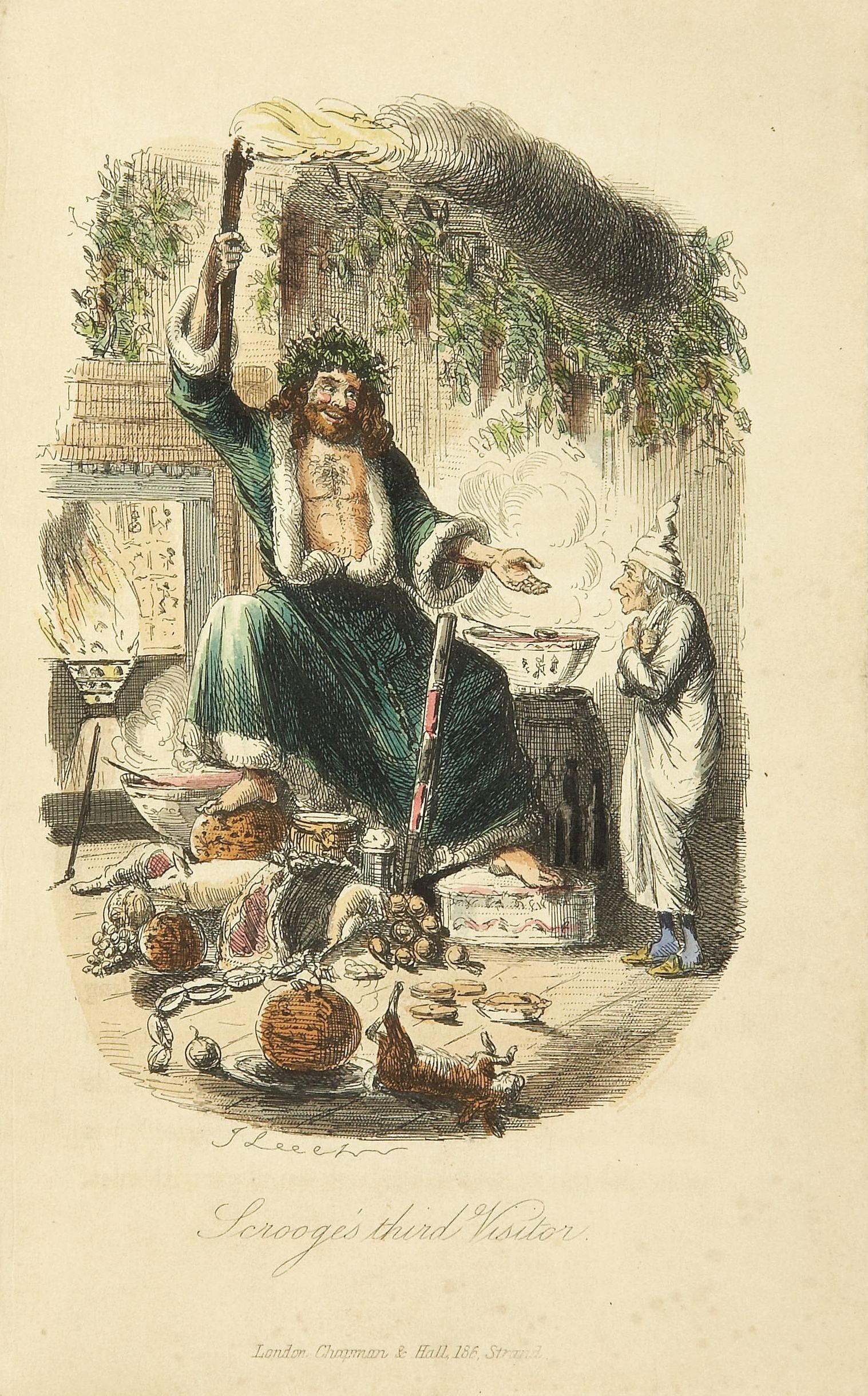
Few stories have been adapted to other media as often as Charles Dickens’ A Christmas Carol. The novella has been adapted so often that we often refer to individual versions of it by the person playing miser Ebenezer Scrooge, rather than the director. The 1951 version (the best full-length feature telling of the story) is the “Alastair Sim version,” while the 1984 made-for-TV movie is the “George C. Scott version.”
This 25-minute cartoon is the greatest Christmas Carol adaptation ever made

Emily St. James was a senior correspondent for Vox, covering American identities. Before she joined Vox in 2014, she was the first TV editor of the A.V. Club.
But if you’re only going to watch one Christmas Carol this holiday season, make it this one. It’s just 25 minutes long and debuted as a TV special in 1971, before going on to win the Oscar for Best Animated Short Subject (still the only TV special and the only Christmas Carol adaptation to manage such a feat).
Yet it hits not just the high points of the story — Scrooge’s visit with four ghosts and his ultimate change of heart — but many of the smaller, spookier moments that are often left out of adaptations, such as a ghostly hearse that follows Scrooge up the stairs, or his brief visit to sailors and miners celebrating the holiday in the wilds of 19th century England. That it accomplishes all of this in such a short running time makes it a marvel of economy. You may never need another version of this story again.

The ghostly hearse passes Scrooge on the stairs. (screenshot)
The film was directed by Richard Williams, a legend among animation fans for his uncompromising artistic vision. (His other main claims to fame are the animation on Who Framed Roger Rabbit and his famously unreleased The Thief and the Cobbler, which was released as Arabian Knight, a horribly butchered film that had little in common with Williams’ plan.) It was produced by Chuck Jones of Looney Tunes fame; the lead animator on the project was Ken Harris.
Harris and Williams used unusual transitions between scenes and camera movements, such as pans and zooms, that aren’t typically utilized in animation — especially animation for television. The look of the special was explicitly meant to nod to the sorts of engravings that accompanied the story on its original publication in the 1840s. That allows for moments of real, eerie power and a muted quality that makes things all the spookier. The ringer here is Sim himself, reprising the role of Scrooge and doing almost as fine a job as he did in 1951.

The Ghost of Christmas Yet to Come points to that which Scrooge would rather not face. (screenshot)
It’s so easy to forget that A Christmas Carol is a ghost story because the book has been so thoroughly dissolved into our cultural hive mind. Yet people used to tell ghost stories fairly often during the holidays, because it’s a season for looking backward, for remembering those you’ve lost along the way. Williams’ version restores the primacy of those specters of things unseen to the tale, which makes the miracle of Scrooge’s redemption all the more affecting.

And everything works out in the end. (screenshot)