Early on in The Idiot, the slightly chilly and deeply playful debut novel from New Yorker writer Elif Batuman, our heroine Selin offers a mission statement of sorts for her writing.
The Idiot is mostly about semiotics. It’s really funny.

Penguin Press

Constance Grady is a senior correspondent on the Culture team for Vox, where since 2016 she has covered books, publishing, gender, celebrity analysis, and theater.
Selin is describing a short story she wrote for an art workshop during her first year at Harvard: “Like all the stories I wrote at that time,” she says, “it was based on an unusual atmosphere that had impressed me in real life. I thought that was the point of writing stories: to make up a chain of events that would somehow account for a certain mood — for how it came about and for what it led to.”
And the atmosphere at the heart of The Idiot is one of linguistic alienation, when the distance between what words say and what they mean seems insurmountable.
Selin is utterly baffled by the codes and linguistic nuances that college freshmen rely on to explain themselves. When her roommate instructs her to buy a poster, Selin asks what kind she wants. “‘A photograph of Albert Einstein,’ she said decisively,” in the manner of college students everywhere who want to demonstrate their erudition and whimsy, and who also feel that Monet and Klimt are too clichéd for them.
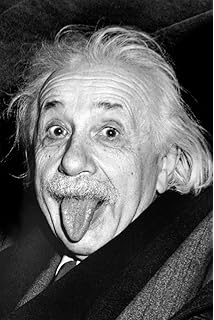
Bewildered, Selin buys an Einstein poster, but she gets one that just shows him in front of a chalkboard instead of the one her roommate obviously meant, where Einstein is playfully sticking out his tongue. Then she spends the remainder of the school year defending Einstein to everyone who stops by her room and informs her that he is wildly overrated.
Even when Selin understands a code well enough to follow it, she’s hyper-aware of its presence. “I’m afraid I’ll accidentally eat it all before I get there,” she says of a box of chocolates, because she’s “following the rule that you had to pretend to have this problem where you couldn’t resist chocolate.”
It’s the same kind of puzzled distance between self and speech that so many people experience during their first year of college, when you start to learn about semiotics and get your mind blown with the idea that language is a constructed system — or the distance that exists in very early childhood, when you are first learning how to talk. Selin seems to have never abandoned the mindset of a child just beginning to encounter language, and when she starts to study the theory and philosophy of language at Harvard, she grows ever more tortured by its mysteries.
She tries to come to terms with language by volunteering as an ESL teacher for adult students, but she can’t teach any of her students to say English words; they just end up saying Spanish cognates with English endings. So now Selin is further tortured by the idea that she and her students have essentially created a language and that they are the only ones who understand it, and is that really fundamentally different from how languages are built in the first place?
All of this distance and alienation keeps the reader at a certain remove from Selin, as well; her deadpan voice is endearing, but it holds you at arm’s length. The Idiot is not a book that wants you to get wrapped up in its characters when you could be reveling in all of its linguistic games instead.
Many of those games come in the form of a long chain of emails between Selin and Ivan, a fellow student whose thoughts seem as abstract and opaque as her own, even if he won’t so much as make eye contact with her in real life. Ivan writes about how society has forgotten about clowns; Selin writes back about the Sapir-Whorf hypothesis; they describe their dreams in great detail.
The emails, in their turn, are a launch pad for thinking about what makes literature worthwhile. Selin keeps rereading the emails and wondering if it’s wrong for her to think of them as literature, or if they’re more of a conversation, or if maybe literature is a conversation in and of itself, and anyway, doesn’t all of Bleak House feel like a description of someone else’s incredibly long dream? Inevitably, she falls in love with Ivan; inevitably, he turns out to be an asshole.
The heartbreak that ensues is slightly melancholy, but it’s not overwhelming: The Idiot doesn’t bring you in close enough for that. It keeps you far enough away that you have to pay more attention to its words than to the emotions that they’re describing. In the end, they become as alien and distant to the reader as they are to Selin all the time.